Which types of fruit and vegetables are most important to wash?
It’s essential to thoroughly wash all supermarket and farmer’s market produce you consume. Regardless of whether your produce is organic or not, it all undergoes human handling as well as potentially drift spray, fertilisers, mould spores, animal waste, and dust and dirt. However, washing beyond the ordinary rinse under water is particularly important for produce that falls under the Dirty Dozen, a list of fruits and vegetables that are most contaminated by pesticides. The Dirty Dozen comprises strawberries, spinach, nectarines, apples, grapes, peaches, cherries, pears, tomatoes, celery, potatoes, and capsicums.
What is the best way to wash these fruits and vegetables?
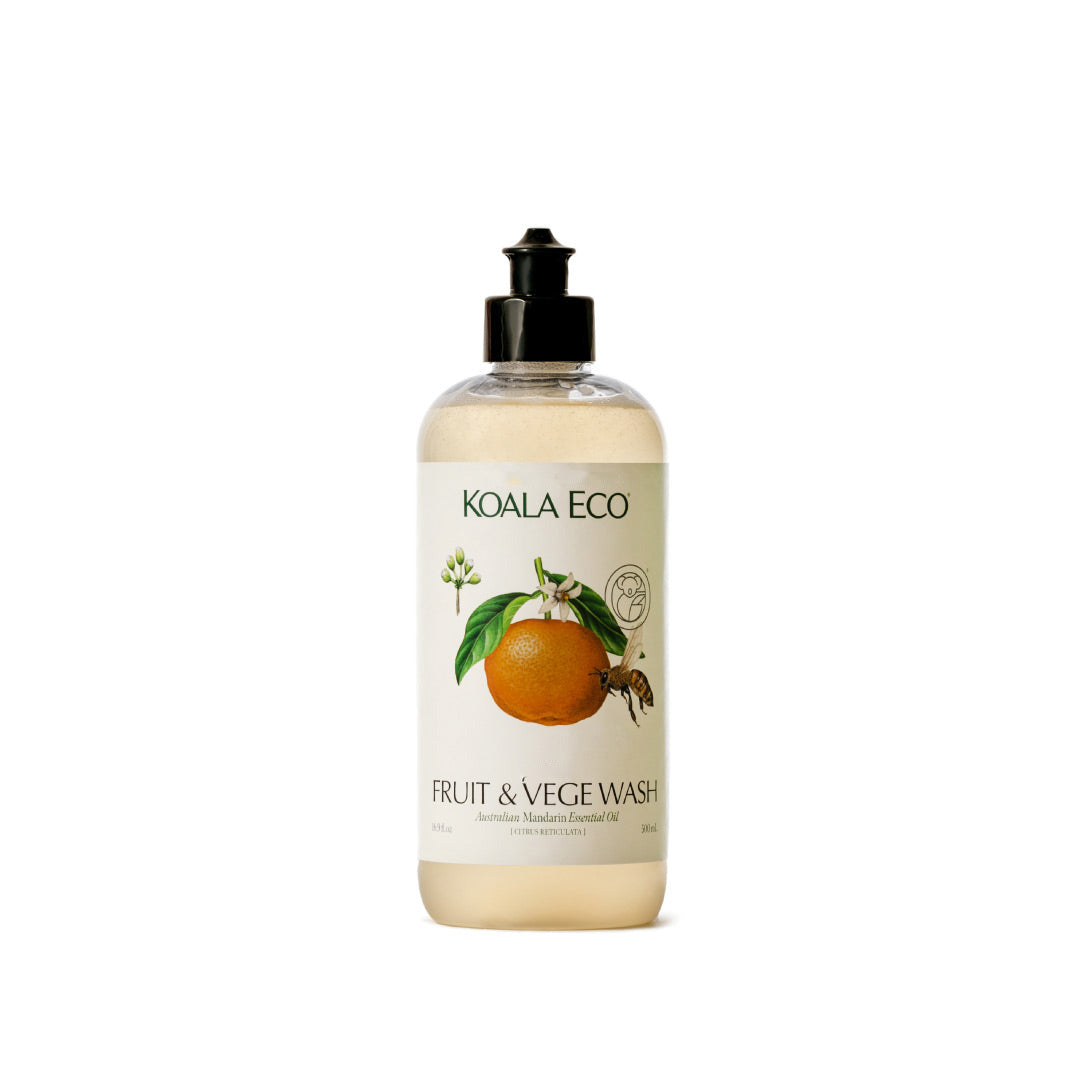
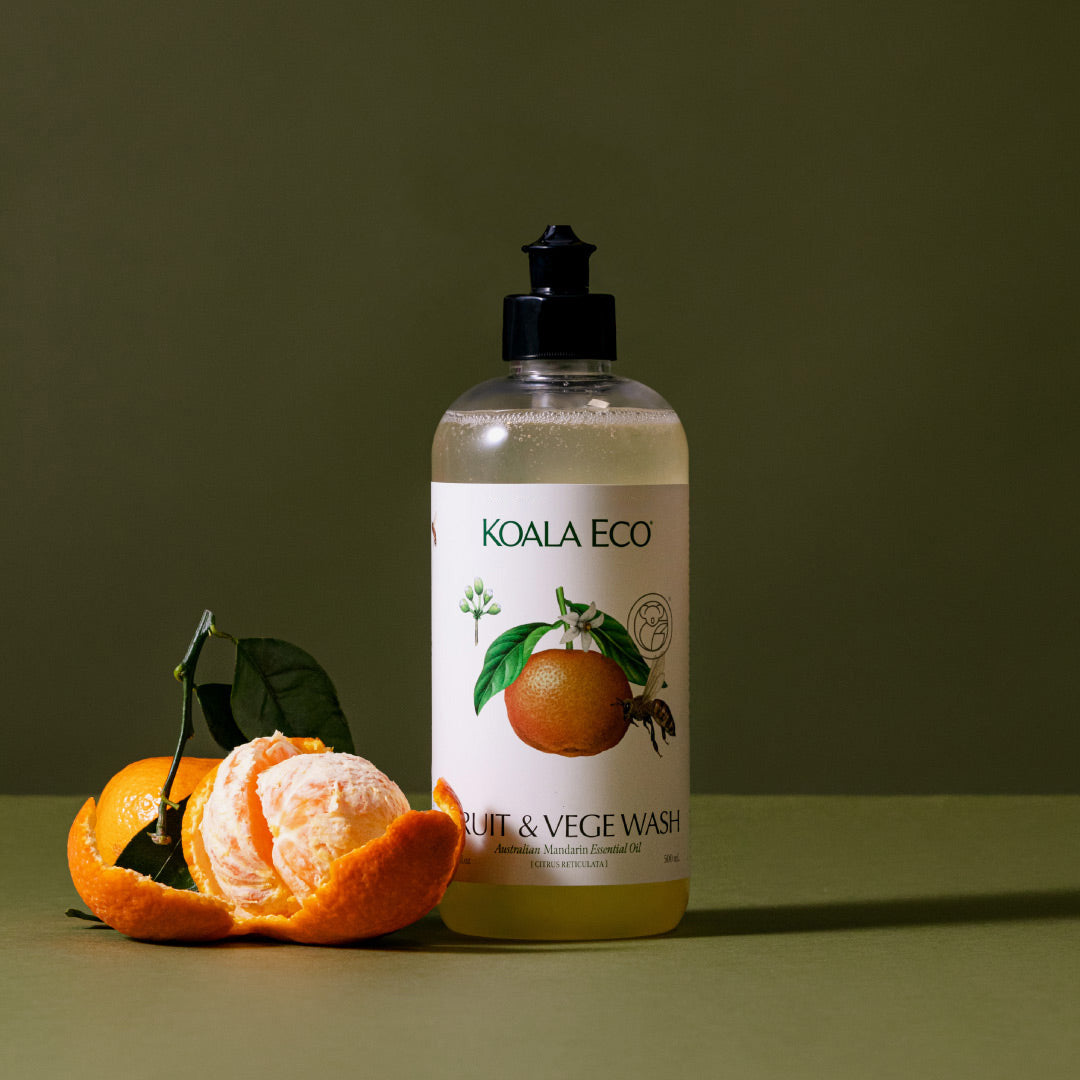
Fruits and vegetables most susceptible to pesticide contamination should be washed with a dedicated Fruit & Vegetable Wash to ensure all pesticides are removed before consumption. Simply add half a capful to a sink of cold water and wash your fruits and vegetables before rinsing clean under running water. For leafy greens like spinach and kale, soak in the solution for five minutes before rinsing clean. Supermarket produce like apples, capsicums, cucumbers, eggplants, and citrus fruits often have wax applied to prevent moisture loss and make them look more appealing to consumers; removing this residue often requires a more thorough scrub with a Bamboo Scrubbing Brush.
Why is it important to use a fruit and vegetable wash instead of just water?
Water is often not sufficient to dissolve waxes and eliminate all traces of pesticides, fertilisers, mould spores, and the effects of human handling. Washing with a dedicated Fruit & Vegetable Wash ensures you’re consuming produce in its natural state and reaping the full nutritional benefits of your fruits and vegetables.
What should people look for in a good fruit and vegetable wash?
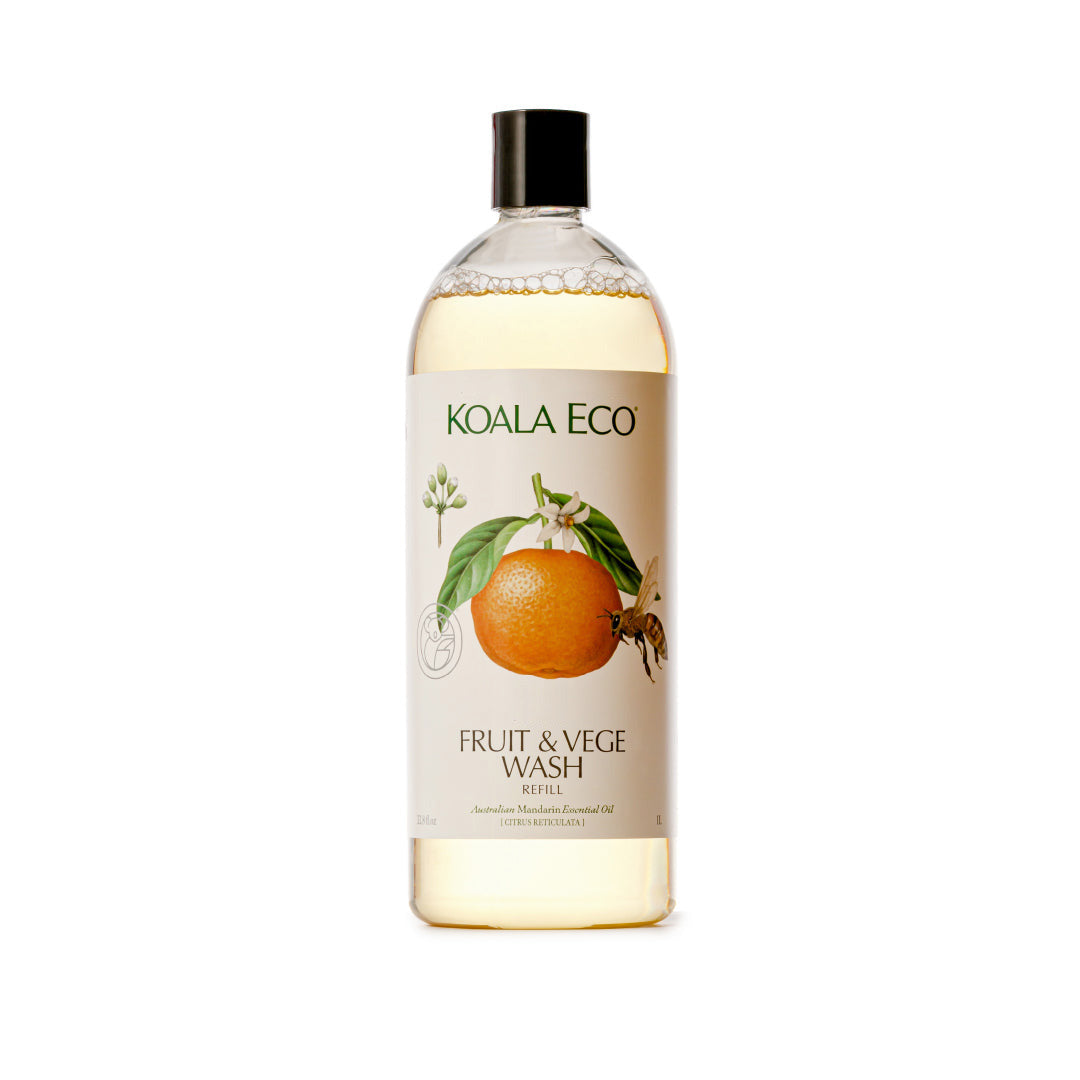
As the purpose of a fruit and vegetable wash is to eliminate toxic residue from your produce, it’s crucial to look for a product that is composed of plant-based, non-toxic, and ideally food-grade ingredients. Our Fruit & Vegetable Wash is powered by pure mandarin essential oil and exclusively used biodegradable, food-grade surfactants and solubizers. Other beneficial ingredients to look out for are vinegar, lemon juice, and citric acid which work to eliminate waxes, bacteria, and pesticides without the use of harsh chemicals.
Will a fruit and vegetable wash affect the taste of the food?
No, as you rinse your produce clean under running water after washing, this will not impact the taste of your food or leave behind any aftertaste. However, if you’re accustomed to consuming your produce without the waxes, residue, and pesticides removed, you’ll likely find using a Fruit & Vegetable Wash makes your fruits and vegetables taste far better!
Should produce be washed immediately before use, or washed, dried, and then stored for use later?
To save time (and product!), we’d recommend washing your produce with our Fruit & Vegetable Wash in bulk, then drying, and storing for use later. Once washed thoroughly, a quick rinse prior to use will suffice.